
ECWCS
Posted by A.I., Wikipedia on 13th Dec 2025
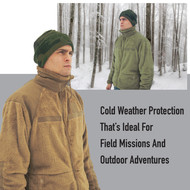
ECWCS stands for Extended Cold Weather Clothing System, a multi-layered, adaptable apparel system developed by the U.S. military for soldiers to stay warm, dry, and comfortable in extreme cold from 40°F down to -60°F, using principles of moisture-wicking and layering. It involves base, middle, and outer layers, like thermal underwear, fleece jackets, and waterproof shells (often GORE-TEX), allowing users to add or remove components to match weather and activity levels.
The Extended Cold Weather Clothing System is a protective clothing system developed in the 1980s by the United States Army Natick Soldier Research, Development and Engineering Center, Natick, Massachusetts.
(Q) What is the difference between Level 1 and Level 2 ECWCS?
(A) Level two is a midweight base layer used in place of level one in above freezing temperatures or used in combination with level one in freezing climates for added insulation. These garments also wick moisture. Built with spandex in a waffle top fabric pattern, they offer enhanced flexibility over level one.
(Q) What is the difference between Level 5 and Level 6 ECWCS?
(A) Level V (5) is a combination of soft-shell jacket and trousers. It offers excellent freedom of movement, good protection from snow and sleet with moderate protection from heavy, wet snow or rain. Level VI (6) offers the best protection from wind, rain and wet snow.
(Q) What is level 7 in ECWCS?
(A) Conforming the US Extended Cold Weather Clothing System (ECWCS). Level 7 Winter Jacket is a final, outer insulation layer for use in extreme cold weather. The Climashield® Apex™ insulation keeps user warm in any conditions.
AIRCORPCAMO TACTICAL carries ECWCS Apparel as an Authorized Dealer of Rothco.